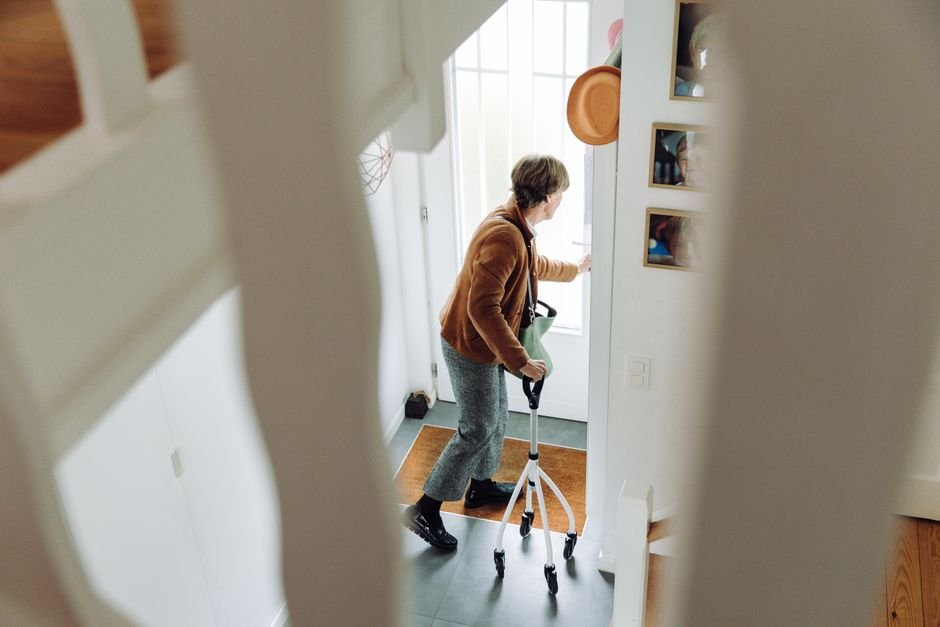
Mobility support isn’t limited to walkers and sticks used for walking itself — a number of smaller aids make specific everyday movements around the house noticeably easier and safer.
Furniture Risers
Raising the height of a favourite chair, sofa, or bed with sturdy risers reduces how far someone needs to lower and lift themselves, addressing one of the more physically demanding everyday movements directly.
Stair and Step Rails
Beyond the main staircase, smaller steps — at a doorway, a raised threshold, or a garden entrance — benefit from their own handrail or grab point if they’re used regularly.
Transfer Aids
For moving between a bed, chair, or wheelchair, a transfer board or a sturdy, well-positioned grab point can make the movement safer and less physically demanding for both the person moving and anyone assisting them.
Reachers and Grabbers
A long-handled reacher reduces the need to bend, stretch, or climb to reach dropped or high-up items, cutting down on off-balance moments during ordinary daily tasks — see our reacher guide.
Non-Slip, Supportive Footwear
Well-fitted shoes with a non-slip sole and good ankle support make a meaningful difference to stability throughout the home, more than most people expect from something as simple as footwear.
Helpful Products on Amazon
AGEasy Four-Leg (Quad) Walking Stick
Approx. ₹1,099 (price as of writing — check Amazon for current price)
View on Amazon →Vissco Medipedic Foldable Walker with Castors
Approx. ₹2,330 (price as of writing — check Amazon for current price)
View on Amazon →KosmoCare Dura Rexine Foldable Wheelchair
Approx. ₹5,869 (price as of writing — check Amazon for current price)
View on Amazon →As an Amazon Associate, we earn from qualifying purchases. See our affiliate disclosure.
Frequently Asked Questions
Do all of these aids need to be introduced at once?
No — it’s usually more practical to address the aids that solve the most immediate, frequent difficulty first, and add others as needs become clear.
How do I know which aids are actually needed?
Watching for specific moments of difficulty — struggling to stand from a chair, reaching for something on a shelf — usually points directly to the aid that would help most.