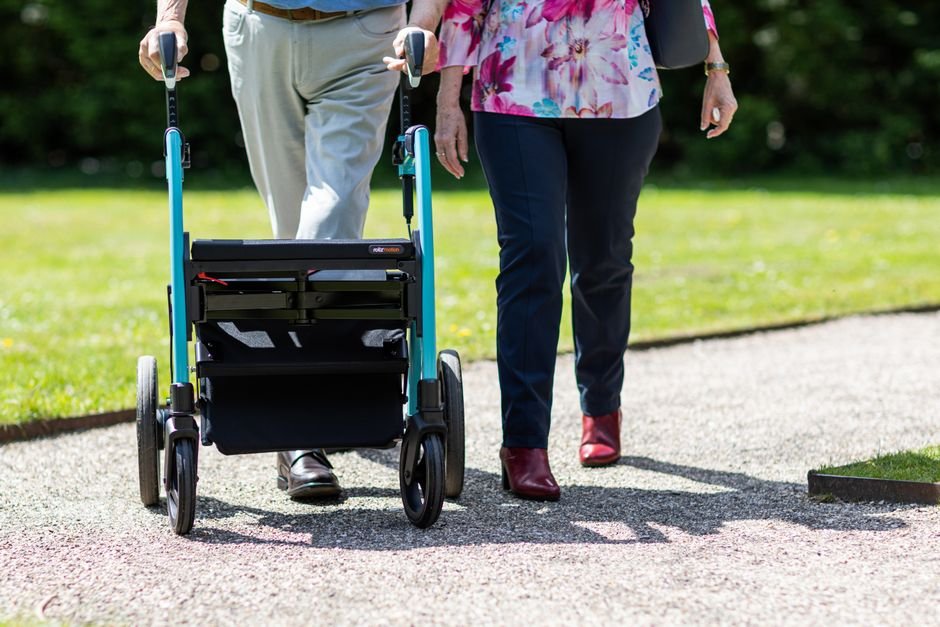
A walker can make a real difference to independence and confidence, but only if it’s the right type and correctly fitted. Here’s what to consider before buying one.
Standard vs Wheeled Walkers
A standard (no-wheel) walker needs to be lifted slightly with each step, which offers maximum stability but requires more arm strength and a slower pace. A two- or four-wheeled walker rolls more smoothly and suits someone who can walk at a steadier pace but doesn’t need to lift the frame each time. Four-wheeled walkers (rollators) often include a seat, useful for resting during longer outings.
Height Adjustment
The walker’s handles should sit roughly level with the wrist crease when the arms hang naturally by the sides, with elbows slightly bent when gripping the handles. Almost all walkers are height-adjustable — it’s worth setting this precisely rather than leaving it at a default height.
Fitting Indian Homes
Narrow doorways, steps between rooms, and compact bathrooms are worth measuring against the walker’s width before buying, since a frame that doesn’t fit through a regular doorway ends up limiting exactly the independence it’s meant to support. A folding walker can also make storage and transport easier in a smaller home.
Brakes and Stability (For Wheeled Models)
If choosing a wheeled walker, check that the brakes are easy to operate with the grip strength the user actually has — some rollator brakes require more hand strength than others, which matters if arthritis or weakness is part of why the walker is needed.
Helpful Products on Amazon
Vissco Medipedic Foldable Walker with Castors
Approx. ₹2,330 (price as of writing — check Amazon for current price)
View on Amazon →As an Amazon Associate, we earn from qualifying purchases. See our affiliate disclosure.
Frequently Asked Questions
Should a walker be chosen without professional input?
For anyone recovering from surgery, a stroke, or a significant fall, it’s worth getting a physiotherapist’s recommendation on the right type, since the wrong choice can genuinely slow recovery or increase risk.
How do I know if a walker still fits properly over time?
Recheck the height periodically, especially after any change in posture, footwear, or physical condition, since these can all shift what “correct height” means.
See our guide on choosing between a walking stick and a walker if you haven’t settled on a walker yet.