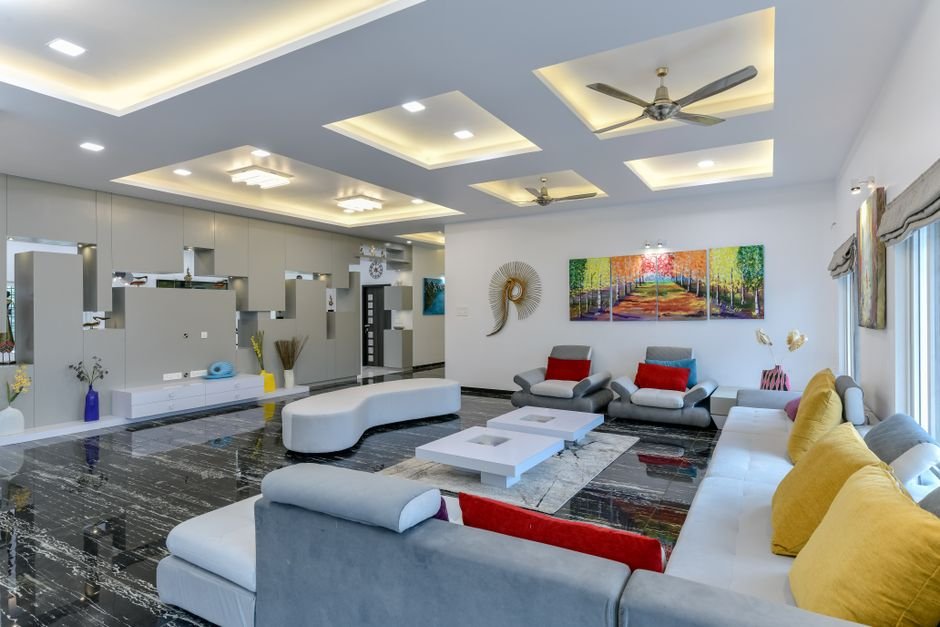
Some fall hazards are near-universal, but a few show up especially often in Indian homes because of how they’re typically built and furnished. Knowing what to look for room by room makes a walkthrough much faster.
Tiled and Marble Flooring
Smooth tile and marble, common in Indian homes, can be slippery even when dry, and significantly more so when wet from mopping, rain, or spills. Anti-slip treatments, mats in high-traffic areas, and prompt drying of any wet patches all help.
Raised Thresholds Between Rooms
Many Indian homes have a small raised threshold or step between rooms, particularly at bathroom or balcony doorways. These are easy to trip over, especially in low light or when carrying something. Marking the edge with contrasting tape or a small ramp can reduce the risk without a major renovation.
Loose Wiring and Extension Cords
Cables running across walking paths — common with extension boards, coolers, or additional appliances — are an easy trip hazard, especially for anyone with reduced vision or a shuffling gait. Routing cables along walls or under furniture removes the hazard directly.
Cluttered Balconies and Verandas
Balconies often double as storage space, which can leave narrow, obstructed walking paths in an area that’s also frequently uneven or slightly outdoors-exposed to rain.
Stairs Without Handrails on Both Sides
Many staircases in older Indian homes have a handrail on only one side, or none at all. A secure rail on both sides gives support regardless of which hand is free or which direction someone is facing.
Poor Lighting in Stairwells and Hallways
Stairwells and internal hallways are often dimmer than main living areas, precisely where good visibility matters most for footing.
Helpful Products on Amazon
Amazon Basics Diatomite Stone Anti-Slip Bath Mat
Approx. ₹1,099 (price as of writing — check Amazon for current price)
View on Amazon →One94Store Rechargeable Motion-Sensor Night Light (Pack of 2)
Approx. ₹576 (price as of writing — check Amazon for current price)
View on Amazon →As an Amazon Associate, we earn from qualifying purchases. See our affiliate disclosure.
Frequently Asked Questions
Which hazard should be addressed first?
Wherever the highest-traffic path is — usually bedroom to bathroom, and the main entrance — since that’s where hazards get encountered most often.
Do these fixes require renovation?
Most don’t — mats, cable routing, contrasting tape on thresholds, and additional lighting are all straightforward additions rather than structural changes.
See our stair safety guide and slippery floor guide for more detail on two of the hazards above.