Anti-Slip Bathroom Mats: Buying Guide
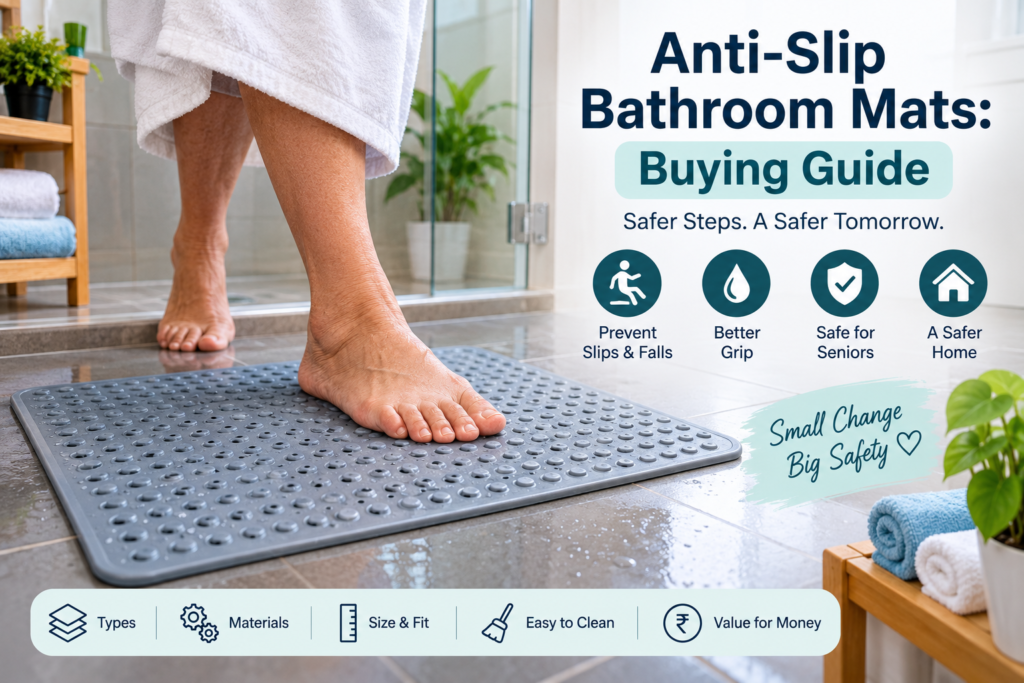
A good anti-slip mat adds grip exactly where bathroom floors get most dangerous — in front of the shower, tub, or sink — without needing any installation.
What to Look for When Choosing an Anti-Slip Mat
- Grip on both sides — a non-slip rubber backing keeps the mat itself from sliding on tile
- Quick-dry material — reduces the time the floor underneath stays damp
- Size and shape — oval or rectangular mats sized to cover the main wet zone
- Ease of cleaning — machine-washable or wipeable mats stay hygienic with less effort
- Edge design — flat, low-profile edges reduce a tripping hazard
Featured Product: VERVENIX Anti-Slip Bathroom Mats (Pack of 2)
Oval, quick-dry anti-slip bathroom mats from VERVENIX (pack of 2) with a soft, water-absorbing surface and a non-slip rubber base to help reduce slipping on wet floors.
Types of Anti-Slip Mats
- Absorbent bath mats with rubber backing: placed outside the shower area to soak up water from wet feet. The rubber base stops the mat itself sliding.
- Suction-cup shower mats: placed inside the wet area or bathtub. Small suction cups grip smooth tile; drainage holes let water pass through.
- Interlocking or PVC grid mats: open, raised designs that let water drain away and can cover a larger wet area.
- Anti-slip floor coatings or strips: a more permanent option applied directly to the floor tile.
Many Indian bathrooms have no separate shower enclosure, so the whole floor gets wet. In that case a combination of a drainage mat in the bathing area and an absorbent mat at the door often works well.
Choosing the Right Size and Placement
- Measure the wet area, usually where your parent stands to bathe, and the spot just outside the bathroom door.
- Choose a mat large enough to stand on fully, with feet not landing half on and half off.
- Avoid thick, fluffy mats with raised edges, which can catch a foot, walker or shower chair leg.
- Make sure the bathroom door can open and close over the mat.
Keeping Mats Safe and Hygienic
- Lift and rinse suction mats every few days, and let them dry fully. Trapped water under the mat can grow mould and reduce grip.
- Wash absorbent mats regularly, following the care label, and dry them in the sun if possible.
- Replace a mat once its rubber backing starts to crack or peel, or the suction cups no longer hold.
- Check hard-water deposits, common in many Indian cities, which can make the mat surface slippery over time.
Mats Work Best With Other Bathroom Aids
A mat reduces slipping, but it does not give support. For elderly parents, it is best used together with grab bars and, where needed, a shower chair or bath stool. Our bathroom safety guide and Indian bathroom safety checklist walk through the complete setup.
Related Guides
Frequently Asked Questions
Can suction mats be used on textured tiles?
Suction cups grip best on smooth, flat tiles. On textured or anti-skid tiles they may not stick well, so a mat with a heavy rubber backing or a drainage grid may be a better option.
How often should a bathroom mat be replaced?
Replace it when the backing is worn, cracked or peeling, when suction cups stop holding, or if mould keeps returning after cleaning.
Is one mat enough for the bathroom?
Often not. Consider a mat in the bathing area, one at the bathroom door, and one near the washbasin if the floor there gets wet.
Can a mat be used with a shower chair?
Yes, but check the chair legs rest flat and stable. Some families place the chair directly on the tile with non-slip tips and put the mat where the feet go.
Before You Buy
Place mats in every spot where feet land wet — in front of the shower, beside the tub, at the sink — and check them periodically for wear, since a worn-down mat loses its grip over time.
Related reading: Best Types of Anti-Slip Mats for Elderly Bathrooms — what makes a mat truly anti-slip, where to place it, and how to keep its grip.