Best Night Lights for Senior Safety: Buying Guide
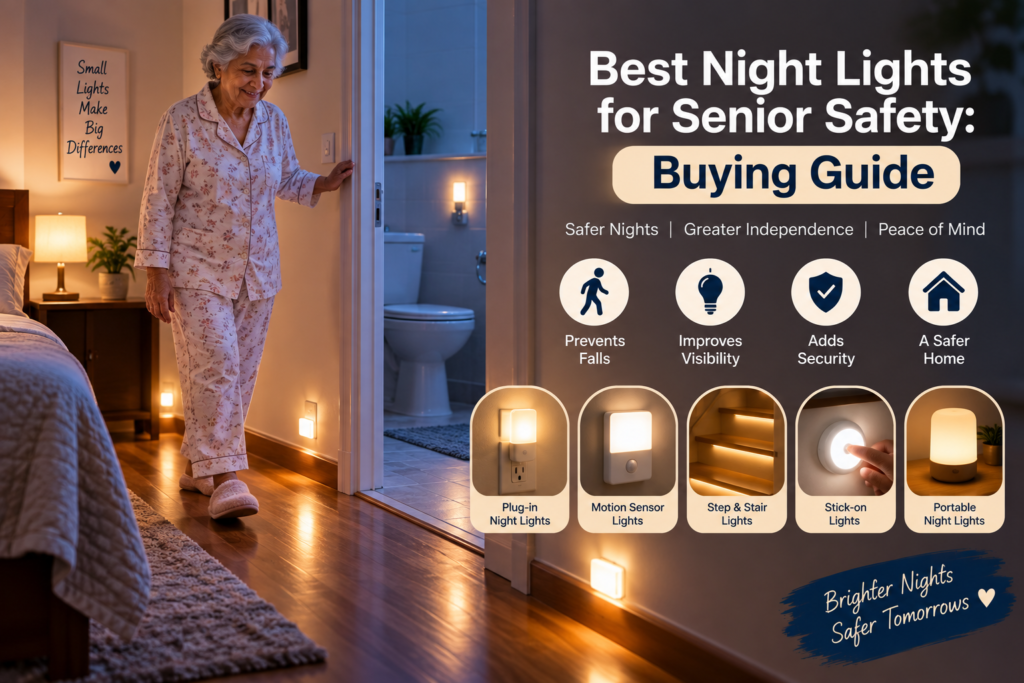
A well-placed night light can light the path from bed to bathroom without needing to find a switch in the dark — a small change that helps cut down night-time trips and falls.
What to Look for When Choosing a Night Light
- Motion sensing — lights that switch on automatically avoid the need to find a switch in the dark
- Soft, warm light — less likely to disrupt sleep or cause disorientation on waking than bright white or blue-toned light
- Power source — USB-rechargeable models skip replacement batteries; plug-in models with battery backup keep working during a power cut, a real consideration in many Indian homes
- Mounting — magnetic or stick-on designs make placement in hallways, stairs, or under cabinets easy
- Placement — cover the actual route taken at night, not just the bedroom
Featured Product: ComSaf Motion Sensor LED Night Light (Pack of 2)
USB-rechargeable, wireless magnetic motion-sensor LED lights from ComSaf (pack of 2) that stick on to illuminate hallways, stairs, or the path to the bathroom at night.
Where to Place Night Lights
A large share of falls among older adults happen at night, on the walk between bedroom and bathroom, so that path is the priority: near the bedroom door, along any hallway, and just outside or inside the bathroom entrance. Walk the actual route taken at night, including the top and bottom of any stairs, and place a light at each dark spot along the way.
A light near the bed itself, low enough not to shine directly into the eyes, also helps with the first disoriented moments after waking.
Avoid Overdoing It
Too many bright lights can be as disruptive to sleep as too few, and can make it harder to fall back asleep after a bathroom trip. The goal is just enough light to see the floor and any obstacles clearly, not full room lighting.
Another Option: One94Store Rechargeable Motion-Sensor Night Light (Pack of 2)
A rechargeable motion-sensor night light from One94Store, sold as a pack of 2, if you want an alternative to the featured pick above.
Plug-In, Rechargeable or Battery: Which Type?
- Plug-in night lights: always powered, with no charging needed. They depend on a socket being in the right place and stop working during a power cut unless they have backup.
- Rechargeable stick-on lights: can be placed anywhere, including hallways with no socket. They need recharging every few weeks, depending on use.
- Battery-powered lights: similar flexibility, but batteries need replacing. Keep spares at home.
- Emergency or inverter-backed lights: come on automatically during a power cut, which is useful in areas with frequent outages.
Many families use a mix: plug-in lights in the bedroom and bathroom, and rechargeable motion-sensor lights along hallways and stairs.
Related Guides
Frequently Asked Questions
Are motion-sensor lights worth the extra cost over a simple always-on night light?
For most people, yes — they avoid the light staying on all night (which some people find disruptive) while still being ready instantly when needed.
What about during power cuts?
A battery-backup or rechargeable model keeps working when mains power doesn’t, which matters for a change that’s specifically there for safety.
Pair night lighting with a clear path free of clutter and cables. Related reading: Home Lighting Safety for Elderly Parents · How to Prevent Falls at Home for Elderly Parents