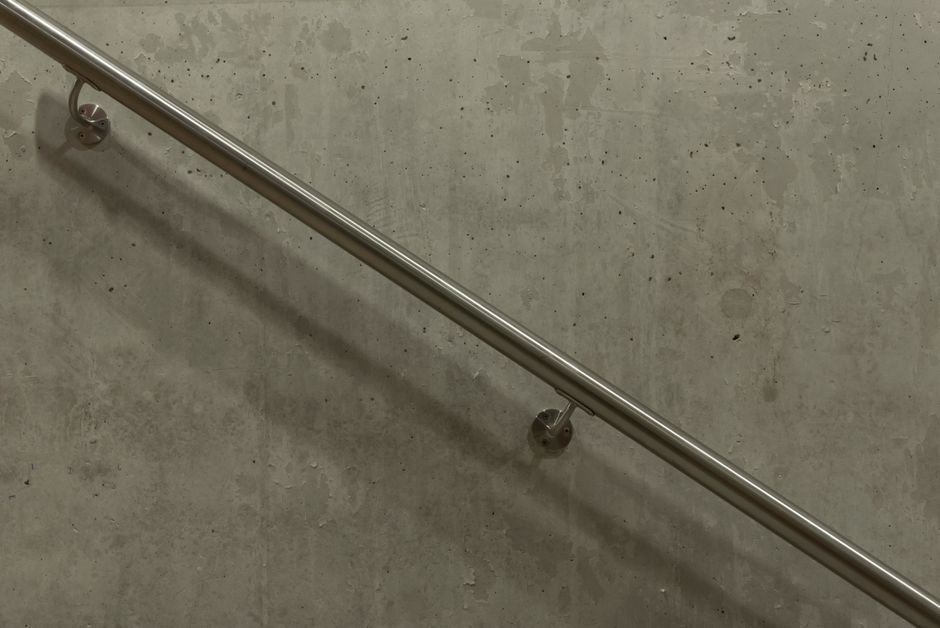
Of all the changes you can make to a bathroom, a well-chosen, well-installed grab bar is usually the single highest-impact one. It’s the difference between having something solid to hold onto at the exact moment of standing up, sitting down, or stepping over a wet threshold — and having nothing. This guide covers the types available, what to look for, and how to think about placement and installation.
Types of Grab Bars
- Straight bars: The simplest option, mounted horizontally or vertically. Good for a single, predictable motion, like standing from the toilet.
- Angled (L-shaped) bars: Combine a horizontal and vertical section in one fitting, giving support through more of a standing-up or turning motion. A popular general-purpose choice.
- Flip-up (fold-down) bars: Mounted beside a toilet and fold up out of the way when not needed. Useful where space is tight or the bathroom is shared with family members who don’t need the support permanently.
- Floor-to-ceiling poles: Tension-mounted between floor and ceiling rather than into a wall. These can be a good option where the wall itself isn’t suitable for anchoring, though they rely on the pole being installed with the correct tension and a solid ceiling.
Material and Grip
Stainless steel is the standard choice for a reason: it holds up well to constant moisture and doesn’t degrade the way some coated or plastic bars can over time. Look for a textured or knurled grip surface rather than smooth metal, since wet, soapy hands need the extra friction. In humid conditions, a bar with a poor-quality coating can start to peel or corrode within a year or two, so it’s worth checking reviews specifically for how a bar holds up over time rather than just its finish when new.
Length and Weight Rating
Grab bars are typically available from around 30 cm up to 90 cm or more. A longer bar generally gives more flexibility in where someone grips it during a movement. Check the manufacturer’s stated weight rating and choose one with clear headroom above the user’s weight — the rating matters less in normal use and much more in the moment someone puts their full weight on it while losing balance.
Where to Install Grab Bars
The two highest-value spots are directly beside the toilet, positioned for the motion of sitting down and standing up, and inside the shower or bathing area, positioned for the motion of stepping over the threshold and for support while washing. Exact height and angle depend on the individual’s height and the specific movement they need help with, which is worth watching for directly rather than guessing. For general orientation, see our bathroom safety guide.
Installation Basics
A grab bar is only as strong as what it’s anchored into. Where possible, it should be screwed into a wall stud or solid masonry, not just into tile or plaster. On a tiled wall, that usually means drilling through the tile into the solid wall behind it, using anchors rated for the wall material and the bar’s weight rating — not just the plastic anchors that come in a generic hardware pack. If you’re not confident doing this yourself, it’s worth paying a plumber or handyman for an hour of work; the cost is small next to what the bar is there to prevent.
Choosing for Indian Bathrooms
- Humidity and rust: Stick to stainless steel or another genuinely rust-resistant material, especially in coastal or high-humidity areas and through monsoon season.
- Wall type: Many Indian bathroom walls are brick-and-plaster behind tile, which generally anchors well, but always confirm before drilling rather than assuming.
- Shared bathrooms: In a bathroom the whole family uses, a permanently mounted bar (rather than a flip-up or suction option) tends to hold up better under everyday use.
Helpful Products on Amazon
AGEasy Flip-Up Grab Bar with Anti-Slip Grip (17 inch)
Approx. ₹2,799 (price as of writing — check Amazon for current price)
View on Amazon →Plantex L-Shape Stainless Steel Grab Bar for Toilet
Approx. ₹999 (price as of writing — check Amazon for current price)
View on Amazon →As an Amazon Associate, we earn from qualifying purchases. See our affiliate disclosure.
Frequently Asked Questions
Can I install a grab bar myself?
Yes, if you have a drill and can confirm what’s behind the tile, but the anchoring is the part that matters most. If in doubt, a professional installation is worth the small cost.
Are suction-cup grab bars a safe alternative?
They’re best treated as a temporary or travel solution. Suction can weaken over time or on textured tile, which isn’t something you want to discover mid-use.
How many grab bars does a bathroom actually need?
Most bathrooms benefit from at least two: one beside the toilet and one in the shower or bathing area. More can be added around fixed hazards like a step or ledge.
A grab bar is a small, inexpensive fitting, but getting the type, placement and installation right is what actually makes it useful in the moment it’s needed.