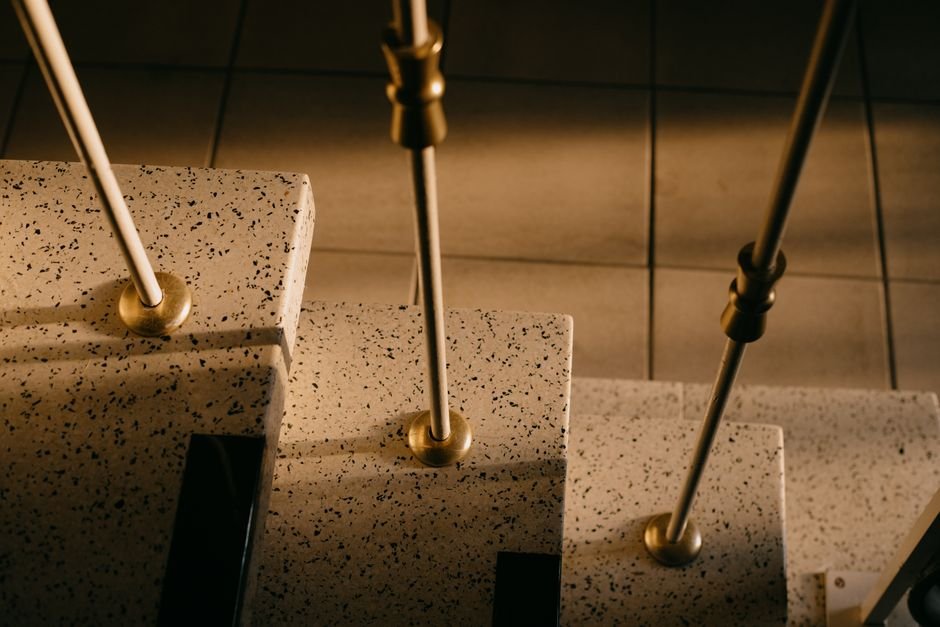
Stairs combine several fall risks at once: a change in level with every step, the need for balance and leg strength, and often lower lighting than the rest of the home. A handful of targeted changes can make a real difference without rebuilding the staircase.
Handrails on Both Sides
A secure, graspable handrail on both sides of the staircase, running the full length, gives support regardless of which side someone approaches from or which hand is free. A single rail, or one that stops partway up, leaves a gap exactly where support may be needed most.
Lighting
Stairwells should be brightly and evenly lit, with switches at both the top and bottom so no one has to climb or descend in the dark to reach a switch. Motion-sensor lighting is a useful addition for night-time trips.
Step Edges and Non-Slip Treads
Marking the edge of each step with a contrasting strip helps depth perception, especially for anyone with reduced vision. Non-slip stair treads or textured paint on smooth stone or tile stairs reduce the chance of a foot slipping mid-step.
Keep Stairs Clear
Stairs are sometimes used for temporary storage — shoes, books, laundry — which is an easy and completely avoidable hazard. Keeping the full width of every step clear should be treated as a firm household rule, not a tidiness preference.
Consider Whether Stairs Are Still the Right Daily Path
For a family member with significant mobility limitations, it may be worth discussing whether a frequently used destination (like a bedroom) could move to the ground floor, reducing how often stairs need to be used at all, alongside the physical safety changes above.
Helpful Products on Amazon
JIALTO Grab Bar with Floor Support (Staircase/Bathroom)
Approx. ₹1,999 (price as of writing — check Amazon for current price)
View on Amazon →As an Amazon Associate, we earn from qualifying purchases. See our affiliate disclosure.
Safe Stair Habits
- Always use the handrail, even when carrying something. Use a bag across the body instead of carrying items in both hands.
- Take one step at a time and avoid rushing, especially when the doorbell or phone rings.
- Wear well-fitting footwear with a non-slip sole rather than socks or loose slippers.
- Avoid using the stairs when drowsy, including soon after taking medicines that cause sleepiness.
- Keep a light on, or use motion lights, when using stairs at night.
Outdoor and Common-Area Stairs
Many Indian homes and apartment buildings have external stairs or common stairwells that become slippery in the rain and are often poorly lit. Ask your housing society about handrails, lighting and anti-slip treatment in shared areas, and mark the edges of steps with contrasting paint or tape where possible.
When Stairs Become Too Difficult
If your parent struggles with stairs daily, consider moving their bedroom and bathroom routine to the ground floor if possible. A stairlift is another option for some homes, but it needs professional assessment and installation. A physiotherapist can also suggest exercises and techniques to make stair use safer.
Related Guides
- Anti-Slip Stair Treads: Buying Guide
- Home Lighting Safety for Elderly Parents
- How to Prevent Falls at Home for Elderly Parents
- Common Fall Hazards in Indian Homes
Related guides
Frequently Asked Questions
Are stair lifts worth considering?
For someone who can no longer manage stairs safely even with rails and good lighting, a stair lift can be worth exploring, ideally with input from a physiotherapist or occupational therapist about what suits their specific mobility level.
What’s the simplest first change?
Adding a second handrail and improving lighting are usually the fastest, least disruptive changes with the biggest safety impact.
Pingback: Home Safety for Seniors with Low Vision: Practical Tips