Low vision means that eyesight remains limited even with the best glasses, contact lenses, medicine or surgery. It is common in older adults, often because of conditions such as macular degeneration, glaucoma, diabetic eye disease or cataract that has not yet been treated.
For families, the challenge is practical: a parent who can no longer see the edge of a step, a white switch on a white wall, or the difference between two bottles. The changes below are simple and affordable, and most can be done in a weekend.
First, Get a Proper Eye Assessment
Before changing the house, make sure your parent has had a recent comprehensive eye examination. Some causes of poor vision, like cataract or an outdated spectacle prescription, can be treated.
The American Academy of Ophthalmology notes that conditions such as macular degeneration and glaucoma can progress, and that regular eye exams and referral to low vision rehabilitation can help. In India, many larger eye hospitals have low vision clinics that assess magnifiers, lighting and daily-living techniques. Ask the ophthalmologist for a referral.
Use Contrast — The Single Most Useful Change
People with low vision often see colour contrast better than detail. Use it deliberately.
Where to add contrast
- Step edges and thresholds: a strip of contrasting colour on the edge of each step or door threshold. Use an anti-slip product for walking surfaces — see our anti-slip stair treads buying guide.
- Switches and sockets: a dark switch plate on a light wall, or a coloured outline around a white switch.
- Door frames and handles: a contrasting handle or a strip of coloured tape on the door frame.
- Dining table: a plain dark plate on a light table mat (or the other way round) makes food easier to see. Plain steel thalis on a dark mat work well.
- Bathroom: a coloured grab bar, toilet seat or bath mat that stands out from white tiles.
What to avoid
- Busy patterns on floors, rugs and bedsheets, which make it harder to spot objects or steps
- Similar colours side by side — for example, a white chair on a white marble floor
Control Glare, Not Just Brightness
Brighter lighting helps, but glare can make low vision worse. Polished marble and vitrified tiles, common in Indian homes, often reflect harsh light.
- Use curtains or blinds that let in daylight but soften direct sun
- Avoid bare bulbs at eye level; use shaded lamps or diffused LED panels
- Use non-glare floor cleaners rather than polish or wax
- Add task lighting where your parent reads, cooks or prays, aimed at the work and not at their eyes
For a full room-by-room lighting plan, see our guide to home lighting safety for elderly parents.
Keep Pathways Clear and Predictable
A parent with low vision relies heavily on memory of where things are.
- Clear a wide path from bed to bathroom, and from the sitting area to the kitchen.
- Remove or secure loose rugs and doormats. Tape down edges or remove them entirely.
- Move wires and charger cables away from walking areas.
- Keep furniture in the same place. Tell your parent before moving anything — even a chair.
- Close doors fully or open them fully. Half-open doors and cupboard doors are easy to walk into.
- Teach family members — including visiting relatives and house help — to put things back exactly where they were.
Label and Organise Everyday Items
- Medicines: large-print labels, rubber bands or coloured stickers to tell bottles apart. Confirm anything unclear with the pharmacist rather than guessing.
- Kitchen: keep frequently used masalas and dals in the same order on the shelf, with large-print or tactile labels (a rubber band, a dot of fabric glue).
- Clothes: group outfits together, or use safety pins inside the collar to mark colours.
- Money: fold different currency notes in different ways, and keep coins in separate pouches.
- Phone and remote: choose large-button models, and add a raised bump sticker on key buttons.
Night-Time Safety
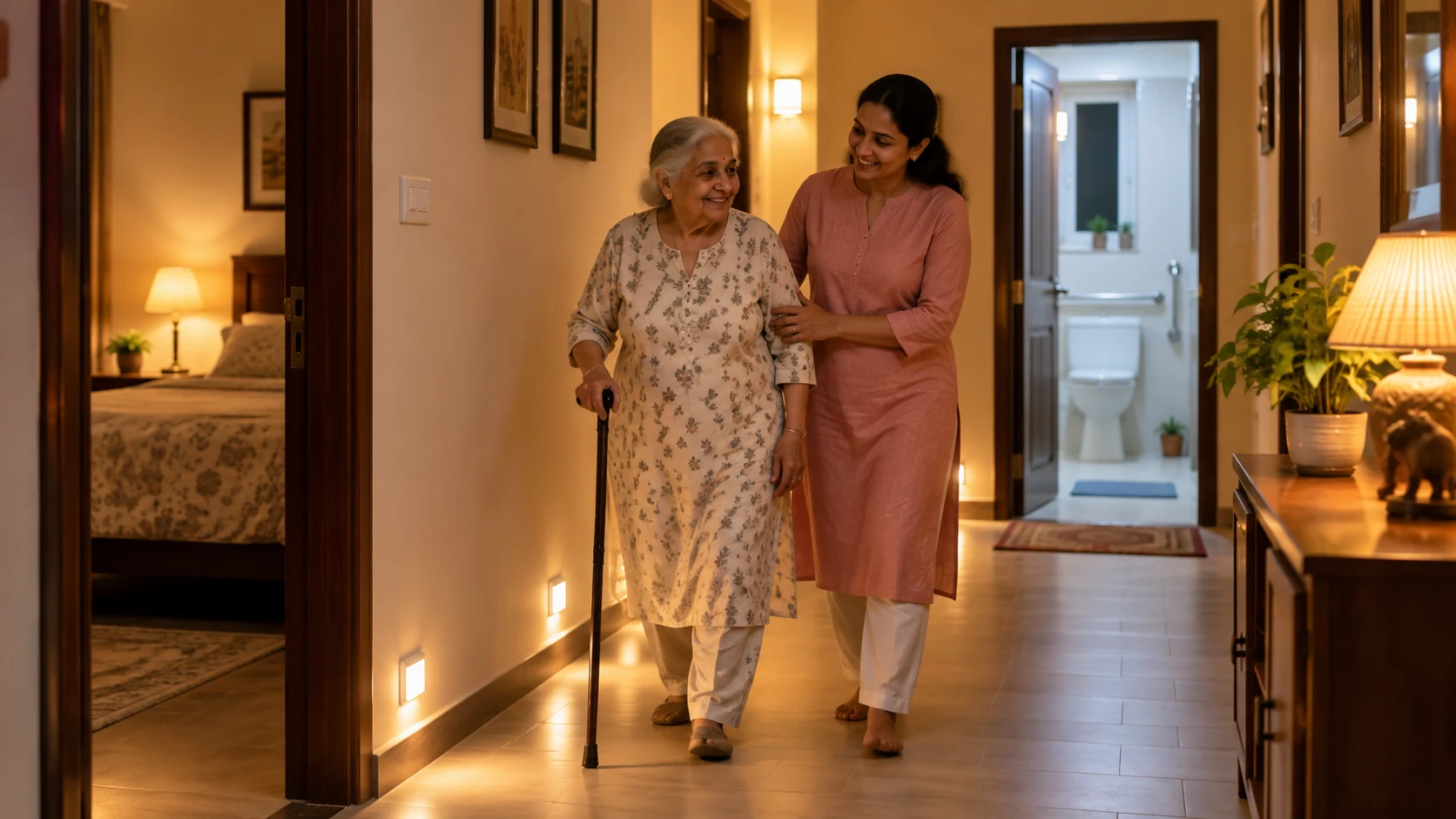
Many falls happen during night trips to the bathroom.
- Use motion-sensor night lights along the route from bed to bathroom
- Keep a torch or lamp switch within reach of the bed
- Make sure spectacles have a fixed spot on the bedside table
Simple Aids That May Help
Low vision aids are very personal. A magnifier that suits one person may not suit another, and the right strength is best chosen with an eye specialist or low vision clinic.
Helpful Products on Amazon
These are examples of product types that may help, chosen on the criteria described above — not a ranking or a guarantee of safety. Check sizes, reviews and return options before buying.
ZIVIK Handheld Magnifying Glass with LED Light (3X and 45X lenses)
An inexpensive illuminated hand magnifier for reading labels and newspapers. Runs on AAA batteries (not included). Strength may not suit everyone — a low vision clinic can advise.
Approx. ₹373 (price as of 4 Oct 2026 — check Amazon for current price)
View on Amazon →One94Store Rechargeable Motion-Sensor Night Light (Pack of 2)
Warm white, USB-rechargeable lights that switch on with movement. Useful along corridors and near the bathroom; remember to recharge them regularly.
Approx. ₹576 (price as of 4 Oct 2026 — check Amazon for current price)
View on Amazon →As an Amazon Associate I earn from qualifying purchases. This does not change the price you pay. Read our Amazon Affiliate Disclosure.
Common Mistakes Families Make
- Assuming poor vision is “just age” and skipping an eye check
- Making rooms brighter but ignoring glare from shiny floors
- Rearranging furniture during cleaning or festivals without telling your parent
- Buying a strong magnifier without professional advice
- Doing everything for your parent, instead of setting up the home so they can stay independent
Low Vision Home Safety Checklist
- ☐ Recent comprehensive eye exam done; low vision clinic referral discussed
- ☐ Contrasting edges on steps and thresholds (anti-slip on walking surfaces)
- ☐ Switches, door handles and grab bars stand out from walls
- ☐ Glare reduced with curtains, shaded lights and non-glare cleaning
- ☐ Task lights in reading, cooking and pooja areas
- ☐ Clear paths with no loose rugs or wires
- ☐ Furniture kept in fixed positions
- ☐ Medicines and kitchen items labelled in large print or by touch
- ☐ Night lights from bed to bathroom
- ☐ Spectacles and torch always kept in the same place
Related guides
Frequently Asked Questions
What is the difference between poor eyesight and low vision?
Low vision is vision loss that cannot be fully corrected with glasses, contact lenses, medicine or surgery. An eye specialist can confirm whether your parent has low vision and what may help.
Which colours give the best contrast?
Generally, dark against light — such as a dark strip on a light floor, or a dark switch plate on a white wall. Yellow or white against dark surfaces also stands out well.
Are brighter bulbs always better?
Not necessarily. More light helps, but glare from shiny floors or bare bulbs can make seeing harder. Aim for bright, even, diffused light.
Can a magnifier replace glasses?
No. Magnifiers are an addition for close tasks like reading labels. The right type and strength should be chosen with an eye specialist or low vision clinic.
How do I help my parent stay independent?
Keep things in fixed places, use contrast and labels, and involve your parent in deciding where things go. Independence is often safer than constant help, because your parent stays familiar with the home.
Related Guides
- Home Lighting Safety for Elderly Parents
- How to Make Stairs Safer for Elderly People
- Best Night Lights for Senior Safety: Buying Guide