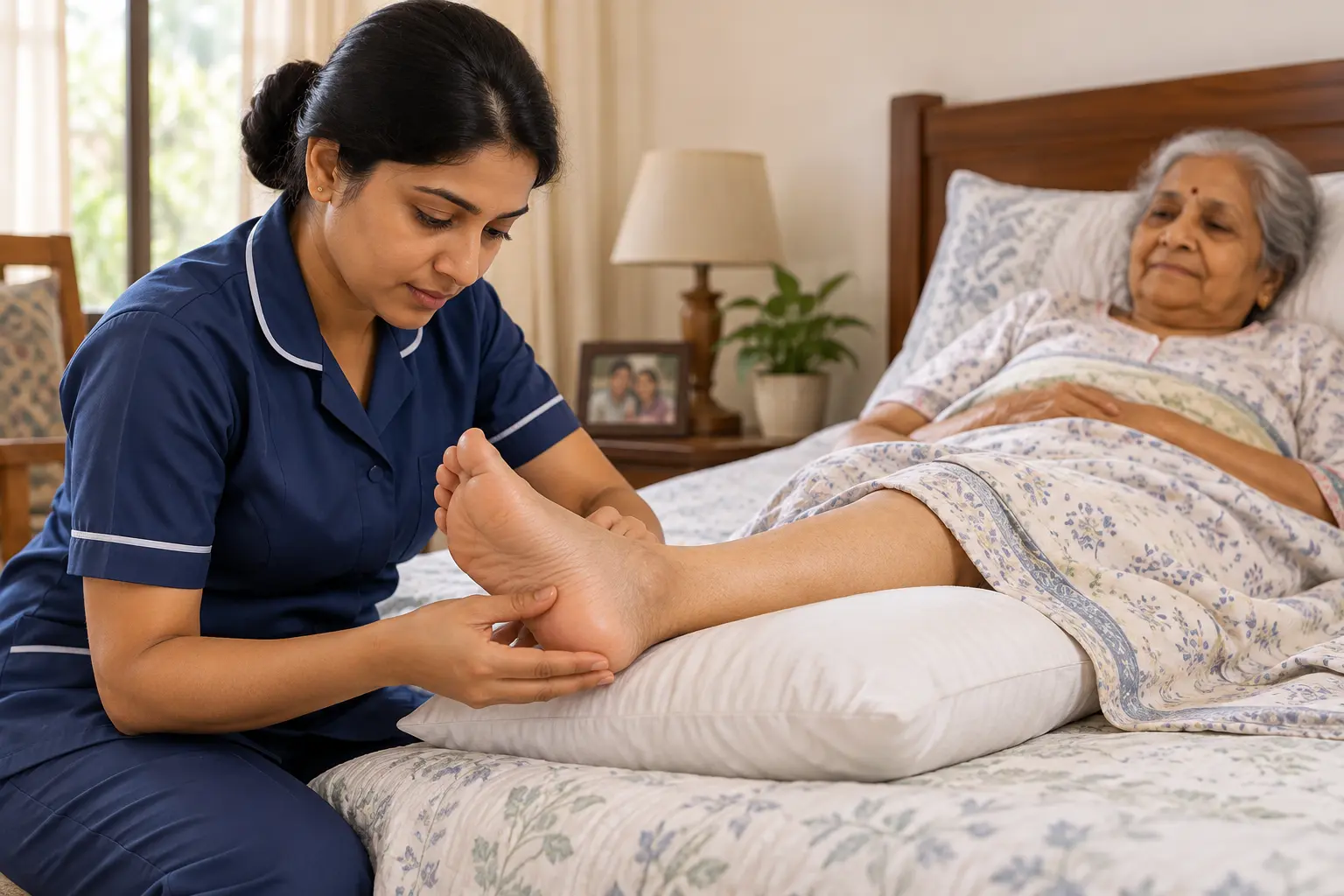
If your parent spends most of the day in bed, one of the biggest worries is the skin. Bedsores, also called pressure sores, pressure ulcers or pressure injuries, can develop when the same area of skin is pressed against the mattress for too long. They often start quietly, as a small red patch over the hip or heel, and can become painful and slow to heal if they are missed.
The encouraging part is that many bedsores can be prevented, or caught early, with simple daily habits at home. This guide explains, in plain language, why bedsores happen, where to look, and what Indian families can do every day to protect a bedridden parent’s skin. It is part of our wider guide to bedridden elderly care at home.
Please note: Bedsores are a medical concern. This article shares general prevention habits only. If you notice broken skin, a wound, or any skin change that does not fade, please show it to your parent’s doctor or a home-care nurse promptly.
In this guide
Why Bedsores Happen
Skin needs a steady blood supply to stay healthy. When a person lies or sits in the same position for a long time, the weight of the body squeezes the skin and the tissue underneath against the bed. Blood flow to that small area slows down, and the skin can start to break down.
Several things make this more likely in an elderly, bedridden person:
- Staying in one position for long stretches because they cannot turn on their own.
- Thin, fragile skin that tears or bruises more easily with age.
- Moisture from sweat, urine or stool, which softens the skin. Hot, humid weather in many parts of India adds to this.
- Friction and sliding, for example when a person slides down the bed or is dragged rather than lifted during a position change.
- Poor appetite or low fluid intake, which can leave the skin less able to repair itself.
- Reduced sensation or confusion, so the person may not feel or say that an area is uncomfortable.
Where Bedsores Usually Form
Bedsores tend to appear over bony areas, where there is little padding between bone and skin. When you check your parent’s skin, pay special attention to:
- The lower back and tailbone (sacrum)
- The hips, especially when lying on one side
- The heels and ankles
- The shoulder blades and elbows
- The back of the head and the ears
- The knees, where they press together when lying on the side
If your parent sits up in a chair or with a backrest for long periods, the buttocks and the area around the tailbone also come under pressure.
Early Warning Signs to Look For
Catching a skin change early makes a real difference. During a daily skin check, look and gently feel for:
- A patch of redness that does not fade after the pressure has been removed for a while. On darker skin, the area may look purplish, bluish or darker than the surrounding skin rather than red.
- Skin that feels warmer, cooler, firmer or softer than the skin around it.
- Pain, tingling or tenderness that your parent mentions or shows when you touch the area.
- Blisters, peeling, or a small open area.
If you see any of these signs, keep pressure off that area as much as possible and tell the doctor or nurse. Do not rub or massage a red area, as this can damage fragile skin further.
Daily Habits That Help Prevent Bedsores
1. Change position regularly
Moving the body regularly is the single most important habit. Many care teams suggest changing position every couple of hours for a person who cannot move on their own, but the right routine depends on your parent’s skin, health and mattress. Ask the doctor or nurse to suggest a schedule and show you safe techniques. Our step-by-step guide on how to reposition a bedridden person safely explains how to do this without hurting your back or your parent’s skin.
2. Check the skin every day
Pick a fixed time, such as during the morning sponge bath or a diaper change, to look at the pressure areas listed above. Good light helps. Some families keep a small notebook to record any changes, which is useful to show the nurse.
3. Lift, do not drag
When moving your parent up the bed or turning them, avoid pulling them across the sheet. Dragging causes friction that can tear fragile skin. A draw sheet or repositioning sheet, used by two people, makes it easier to lift and slide gently.
4. Keep the head of the bed only as high as needed
A raised backrest is helpful during meals, but if it stays high for hours, the body tends to slide downwards, putting extra pressure and friction on the tailbone. Unless the doctor has advised otherwise, lower it again after eating and the rest period that follows.
5. Encourage small movements
If your parent can move a little, encourage gentle shifts of weight, bending the knees, or moving the arms. Even small movements help. A physiotherapist can suggest simple exercises suited to their condition.
Mattress, Bedding and Positioning
- Pressure-relieving mattress: An air mattress or pressure-relieving mattress may help spread the body weight more evenly. It works alongside repositioning, not instead of it. Ask the nurse which type suits your parent.
- Smooth, clean sheets: Wrinkles, crumbs and folds can press into the skin. Pull the sheet smooth after every change of position.
- Breathable cotton: Cotton sheets and loose cotton clothing are usually more comfortable in Indian weather than synthetic fabrics.
- Pillows and wedges: Pillows between the knees and ankles stop bony areas pressing together when lying on the side. A pillow under the calves can help lift the heels slightly off the mattress so they are not pressing directly on it.
- Avoid ring cushions: Doughnut-shaped cushions can concentrate pressure around the edge and are generally not recommended for preventing bedsores.
Skin Care and Hygiene
Clean, dry and moisturised skin is more resilient. A few practical points:
- Clean the skin gently after any urine or stool leak, using lukewarm water and a mild cleanser, then pat dry rather than rubbing. Our guide to changing adult diapers for bedridden seniors covers this in detail.
- Change diapers and underpads promptly when wet.
- Pay attention to skin folds, under the breasts, the groin, and between the buttocks, where sweat can collect.
- Use a gentle moisturiser on dry skin, avoiding the area between the toes. If your parent has frequent leaks, ask the nurse whether a barrier cream would help.
- Daily bathing in bed is covered in our guide on giving a bed bath to an elderly person.
Food, Water and Bedsores
The skin needs nourishment to stay strong and heal. A bedridden person often eats and drinks less, especially if they are unwell, tired or have difficulty swallowing. Offer small, frequent meals and regular sips of water through the day, unless the doctor has advised a fluid limit. If your parent is losing weight or eating very little, ask the doctor or a dietitian for advice. Our guide on feeding a bedridden elderly person safely has practical tips for mealtimes.
When to Call the Doctor or Nurse
Contact your parent’s doctor or a home-care nurse without delay if you notice:
- Any open skin, blister or wound over a pressure area
- Redness or discolouration that does not fade
- A sore that is getting bigger, deeper, or smells bad
- Pus, increasing pain, swelling or warmth around a sore
- Fever, unusual drowsiness or confusion alongside a skin problem
Wound care should be guided by a professional. Please do not apply home remedies, powders or ointments to an open sore without advice.
Helpful Products for Bedsore Prevention
These items may make pressure care easier at home. They support, but do not replace, regular repositioning and skin checks. Ask your parent’s nurse or physiotherapist which would suit their needs.
Affiliate disclosure: Some links in this section are Amazon affiliate links. As an Amazon Associate, we earn from qualifying purchases, at no extra cost to you. See our affiliate disclosure.

KosmoCare anti-decubitus air mattress with pump
An alternating air mattress may help spread pressure more evenly for someone who spends long hours in bed.
FOVERA foot elevator pillow for heel and ankle
Lifts the heels off the mattress so they are not pressing directly on it. Check the skin under any straps regularly. Approx. ₹908 at the time of writing (October 2026); check Amazon for the current price.

FOVERA wedge pillow
Useful for supporting the back when your parent is turned onto their side.
KHOOBREZ patient repositioning sheet with handles
Lets two caregivers lift and move a person up the bed with less friction on the skin. Approx. ₹929 at the time of writing (October 2026); check Amazon for the current price.

Karein Classic disposable underpads
Catches leaks so the bed and skin stay drier between changes.
Related guides
Frequently Asked Questions
How quickly can a bedsore develop?
A bedsore can begin to form within hours in a person who cannot move and has fragile skin. This is why regular position changes and daily skin checks matter so much.
Can an air mattress prevent bedsores on its own?
No. A pressure-relieving mattress may help, but it does not replace regular repositioning, good hygiene, nutrition and daily skin checks. Ask the nurse how to use it correctly.
Should I massage a red area to improve blood flow?
No. Rubbing or massaging a red area over a bony part can damage fragile skin. Keep pressure off the area and tell the doctor or nurse.
Is talcum powder good for preventing bedsores?
Powder can clump in skin folds and is not a substitute for keeping the skin clean and dry. Ask your nurse which products are suitable.
Who should treat a bedsore that has already formed?
Open sores and wounds should be assessed and treated by a doctor or trained nurse. Home caregivers can help by following their instructions closely.
Conclusion
Preventing bedsores is about steady, everyday care: changing position regularly, checking the skin, keeping it clean and dry, and making sure your parent eats and drinks enough. No family gets every day perfect, and that is fine. What matters is noticing changes early and asking for professional help when you need it.
Disclaimer: This article provides general educational information only. It is not a substitute for personalised medical advice, diagnosis, treatment, or hands-on caregiver training. Always consult a qualified doctor, nurse, physiotherapist, dietitian or other healthcare professional about your family member’s specific needs.