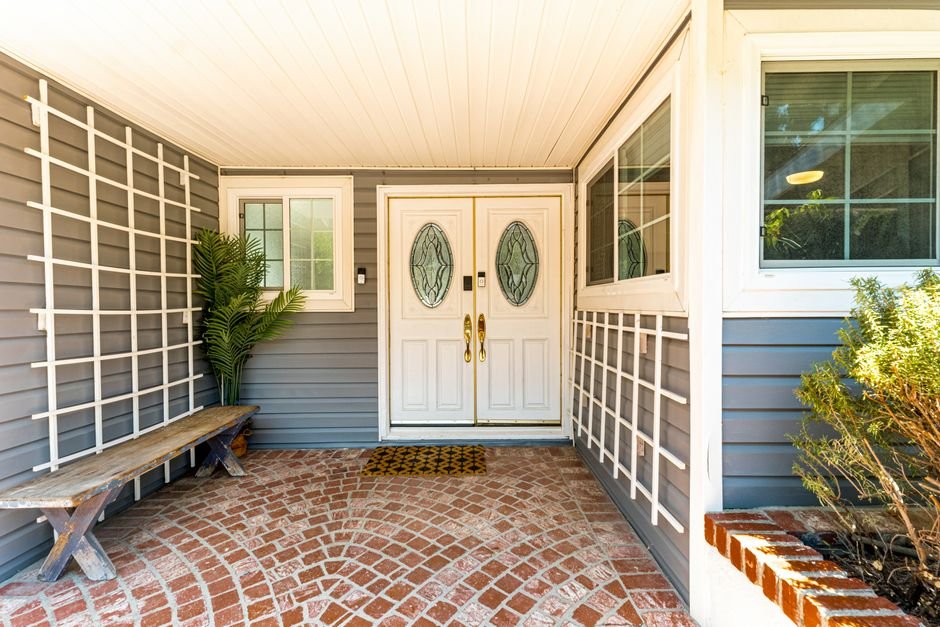
Doorways and entrances are easy to overlook, but they combine several small hazards — steps, raised thresholds, heavy doors, narrow widths — that add up over the course of a day.
Entrance Steps
A secure handrail at the main entrance, plus good lighting for after-dark arrivals, addresses one of the more commonly overlooked risk points, since the entrance is used every time someone leaves or returns home.
Raised Thresholds
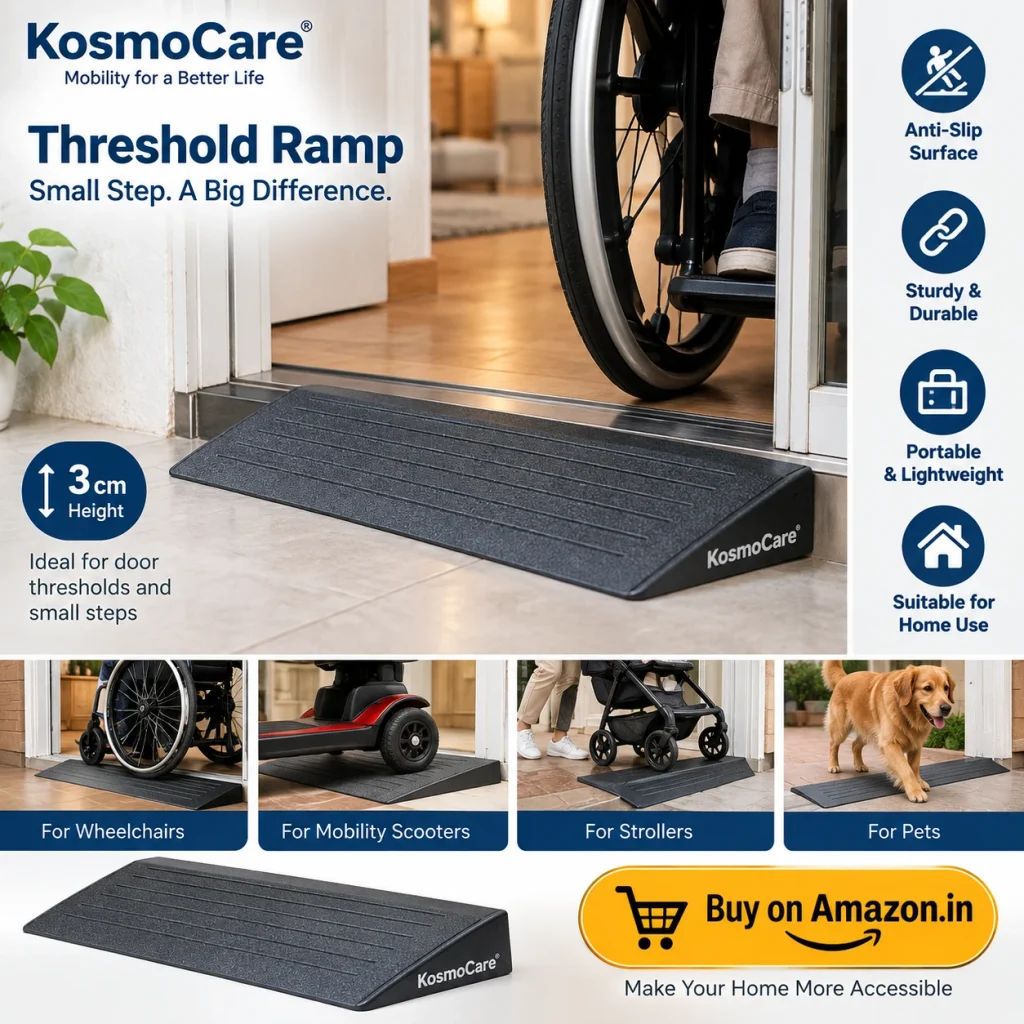
Small internal steps between rooms, especially at bathroom or balcony doorways, are a common trip hazard in Indian homes. Marking the edge clearly or adding a small ramp reduces the risk without needing to remove the threshold entirely.
Helpful Products on Amazon
KosmoCare TPE Portable Threshold Ramp
Approx. ₹2,189 (price as of writing — check Amazon for current price)
View on Amazon →As an Amazon Associate, we earn from qualifying purchases. See our affiliate disclosure.
Door Width
If a walker or wheelchair is or may become part of daily life, it’s worth checking that key doorways — bedroom, bathroom, main entrance — are wide enough to pass through comfortably, since standard door widths aren’t always sufficient.
Door Weight and Hardware
Heavy doors, stiff hinges, and round doorknobs (compared to lever handles) can all be more difficult to manage for anyone with reduced grip strength. Lever handles and well-maintained, easy-swinging doors reduce the physical effort needed.
Visibility
Adequate lighting at every entrance and doorway, inside and out, helps with both safe footing and simply seeing who’s arriving, which matters for security as well as safety.
Main Door and Entrance Checklist
- A sturdy handrail beside any entrance steps, on both sides if possible
- A bright light over the door, ideally motion-activated, so no one fumbles for keys in the dark
- A non-slip doormat with a rubber back, especially important during the monsoon
- A small shelf or stool near the door to put down bags while unlocking
- A shoe rack placed so footwear never lies across the walking path
- A peephole at a comfortable height, or a video doorbell, so your parent can check visitors without rushing to the door
Ramps and Threshold Solutions
Many Indian homes have a raised threshold (a small step) at bathroom, balcony and main-door entrances. For walker or wheelchair users, a small rubber or aluminium threshold ramp can bridge the gap. For larger steps, a proper ramp should have a gentle slope, a non-slip surface and handrails. Speak to a contractor or occupational therapist before building one. Our stair safety guide covers steps with more than one level.
Security and Independence
An entrance that is safe to use also helps independence. Lever door handles, a light-to-open lock and a key hook at a fixed spot reduce effort and forgetfulness. If your parent is often alone, consider a simple call button or a phone kept near the entrance, so help can be called after a fall at the door.
Related Guides
- Wheelchair Accessories That Make Daily Life Easier
- Simple Home Modifications for Ageing Parents
- How to Make Stairs Safer for Elderly People
- How to Make an Indian Home Senior Friendly
Related guides
Frequently Asked Questions
Is widening a doorway a major renovation?
It typically requires structural work, so it’s usually reserved for situations where a wheelchair or wide walker is already or will soon be part of daily life, rather than done preventively.
What’s the simplest first change?
Adding a handrail at entrance steps and marking or ramping any raised internal thresholds are both quick, non-structural changes with real impact.