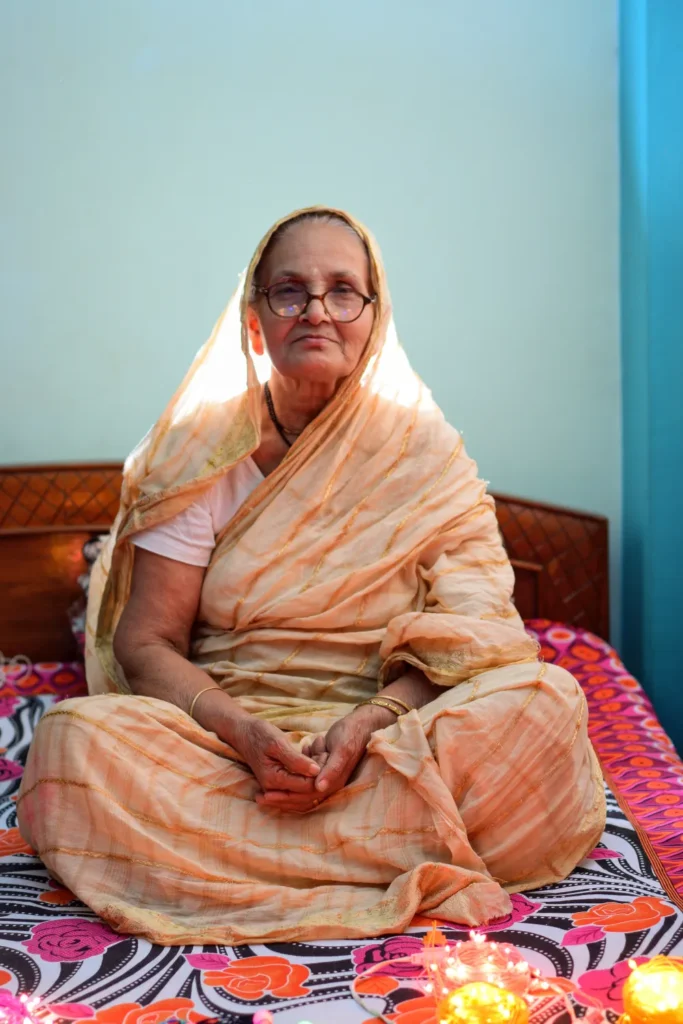
Older adults get in and out of bed several times a day and often once or twice at night, when they are drowsy and the room is dark. If the bed is too low, too high or the mattress too soft, every one of those moments becomes harder — and some become falls.
Many Indian homes have low wooden cots, high storage beds or thick, soft mattresses that suited the family years ago. This guide explains how to check whether your parent’s bed still works for them and how to adjust it without necessarily buying a new one.
How to Check the Right Bed Height
A simple test: ask your parent to sit on the edge of the mattress with their feet flat on the floor.
- Knees roughly level with the hips, or very slightly lower, and feet flat on the floor — the height is usually about right.
- Knees higher than the hips — the bed is too low. Standing up will need more effort and more push from the arms.
- Feet dangling or only toes touching the floor — the bed is too high. Your parent may slide off or land unsteadily when getting down.
Remember to test with the mattress your parent actually uses — a thick mattress can add several inches — and with the footwear they wear at night (often none).
When the Bed Is Too Low
Low cots and floor-level beds are common in Indian homes. Options include:
- Sturdy bed risers under each leg. Choose risers rated for well above the combined weight of the bed and user, with a wide base, and make sure the bed legs sit fully in them.
- A thicker, firm mattress to add a little height.
- Replacing the cot with a bed of a suitable height if risers would make it unstable.
Avoid stacking bricks, books or wooden blocks under the legs; they can shift or crack.
When the Bed Is Too High
High storage beds (box beds) are popular but can be difficult for shorter or frail parents.
- Use a thinner mattress if the current one is very thick.
- Avoid footstools to climb into bed — they slide and tip.
- If the bed cannot be lowered, consider moving your parent to a lower bed in the same room.
Choosing a Mattress for an Elderly Parent
A mattress affects both comfort and safety. Very soft mattresses let the body sink in, which makes rolling over and sitting up much harder, and the soft edge can give way when your parent sits on it to get up.
- Medium-firm support usually makes it easier to turn and sit up while staying comfortable. Very hard mattresses can be uncomfortable for thin or frail people.
- Firm edges matter, because older adults sit on the edge to get in and out of bed.
- Breathable materials help in hot, humid weather.
- A removable, washable cover and a waterproof mattress protector if there is any incontinence.
- Trial period and return policy — let your parent try it for a few weeks if possible.
For parents who spend most of the day in bed or are at risk of pressure sores, a standard mattress may not be enough. Our guide on preventing bedsores explains when a pressure-relief or air mattress may be advised.
Getting Up Safely: Something to Hold
Even with the right height, many older adults need something to push against when standing. A bed assist rail fixed under the mattress gives a stable handle beside the bed. These are different from full-length rails meant to stop someone rolling out; for frail or confused parents, discuss the choice with a doctor or therapist, as some rails can create entrapment risks if gaps are not correct. Our guide to getting in and out of bed safely explains the technique step by step.
The Space Around the Bed
- Keep one side of the bed against the wall only if your parent can still get out comfortably on the other side.
- Leave a clear path from the bed to the bathroom, free of rugs, wires and footwear.
- Place a lamp or night light that can be switched on before standing up.
- Keep water, glasses, phone and a call button on a stable bedside table within reach.
- Make sure the bed does not slide — lock castors or add anti-slip pads under the legs.
Signs It Is Time to Re-Check the Bed
- Your parent rocks several times or pushes hard with their arms to stand up.
- They sleep in a chair because getting into bed is difficult.
- They have slid off the edge or nearly fallen getting out of bed.
- They have had recent surgery, illness or a change in mobility.
Helpful Products on Amazon
These are examples of product types that may help, chosen on the criteria described above — not a ranking or a guarantee of safety. Check sizes, reviews and return options before buying.
FOVERA Bed Safety Rail With Storage Pocket
Bed assist rail listed as compatible with home and hospital beds, with push-pin assembly and storage pockets. Check the fit for your bed and discuss use with a therapist for frail or confused parents.
Approx. ₹2,990 (price as of 12 Nov 2026 — check Amazon for current price)
View on Amazon →Lakdibaaz Wooden Bed Risers (3 inch)
Wooden furniture risers listed for beds and heavy furniture, raising height by about 3 inches. Confirm your bed legs fit securely and the load rating is suitable.
Approx. ₹649 (price as of 12 Nov 2026 — check Amazon for current price)
View on Amazon →Wakefit ShapeSense Orthopedic Mattress (Single, 6 inch)
Medium-firm memory foam mattress (75 × 30 × 6 in as listed) with a removable cover and 10-year warranty. Check the size against your bed and the return policy.
Approx. ₹7,598 (price as of 12 Nov 2026 — check Amazon for current price)
View on Amazon →As an Amazon Associate I earn from qualifying purchases. This does not change the price you pay. Read our Amazon Affiliate Disclosure.
Related guides
Frequently Asked Questions
What is the ideal bed height for elderly people?
There is no single number. A good guide is that when your parent sits on the edge, their feet are flat on the floor and their knees are roughly level with their hips.
Is a hard mattress better for elderly people?
Not necessarily. Very soft mattresses make turning and sitting up harder, but very hard ones can be uncomfortable. Medium-firm with a firm edge often suits many older adults.
Are bed risers safe?
Sturdy risers with a wide base and a suitable load rating can be safe if the bed legs sit fully inside them. Avoid improvised supports such as bricks or books.
Should elderly people sleep on the floor?
Getting up from the floor is difficult and risky for most older adults. A bed of suitable height is usually safer.
Do elderly parents need a bed rail?
Not always. A short assist rail can help with standing up. Full-length rails need care because of entrapment risks; ask a doctor or therapist first for frail or confused parents.